Pet Health
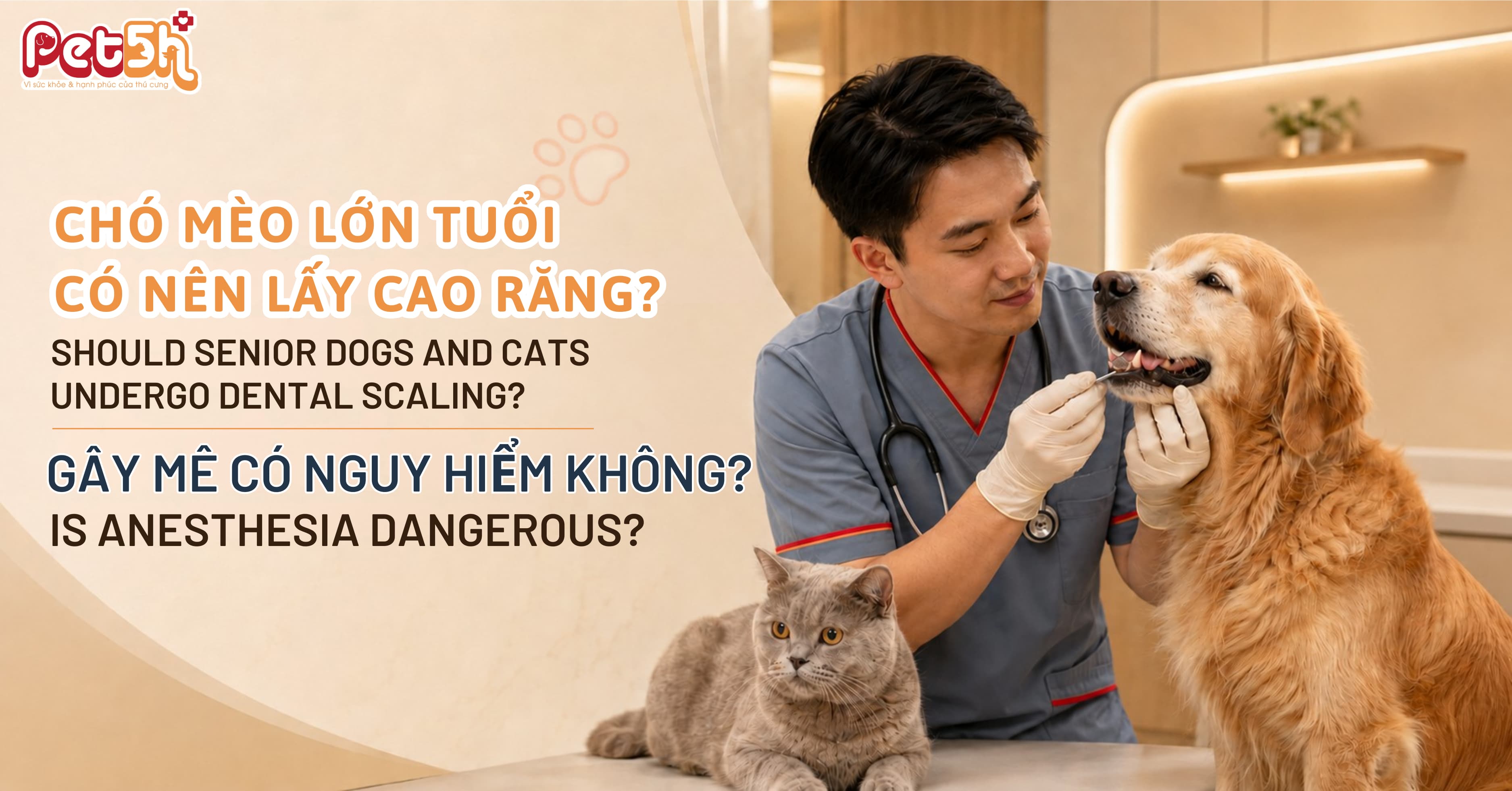
As dogs and cats age, they are more likely to develop tartar buildup and problems such as bad breath, inflamed gums, pain while chewing, or loose teeth. However, when a veterinarian recommends dental scaling under anesthesia, many pet owners worry: “My pet is already old. Is anesthesia dangerous?” or “Is there a way to clean my pet’s teeth without anesthesia?”
Some visible tartar can be removed while a pet is awake. However, this cannot replace a dental procedure performed under anesthesia because it is difficult to clean below the gumline, the airway is not protected, and important dental problems may be missed. Inhalation anesthesia also carries some risks, but advanced age alone is not an absolute contraindication. Safety depends on each pet’s health, the pre-anesthetic evaluation, an appropriate anesthetic plan, monitoring systems, and recovery care.
In this article, the Pet5H Animal Hospital shares practical, easy-to-understand information to help you learn more about the limitations of anesthesia-free dental scaling, the role of inhalation anesthesia, and ways to minimize risks when caring for the oral health of senior dogs and cats.
1. Why are senior pets more likely to develop dental problems?
Senior dogs and cats have often had years of plaque buildup, especially if their teeth have not been brushed or checked regularly. Over time, plaque can harden into tartar, creating an environment where bacteria can grow and cause gum inflammation.
Pet owners should take their pets to a veterinarian if they notice persistent bad breath, yellow-brown tartar, red or bleeding gums, excessive drooling, chewing on one side, dropping food, eating less, or reacting when the mouth area is touched. These may be signs of gingivitis, periodontal disease, fractured teeth, or other problems that require a veterinary examination.
2. Can senior pets have their teeth scaled without anesthesia?
An important part of dental scaling involves not only the visible surfaces of the teeth but also the area below the gumline, where periodontal disease commonly progresses. When a pet is awake, placing instruments in this area can cause pain and discomfort and may make the pet react. It is also difficult for the veterinarian to fully examine the inner surfaces of each tooth, periodontal pockets, fractured teeth, or loose teeth.
Dental instruments are used close to the tooth and surrounding tissues. If a pet suddenly shakes its head, struggles, or bites, the instrument may injure the gums, tongue, or other soft tissues in the mouth. In addition, without an endotracheal tube, the airway is the airway cannot be protected to the same extent during the procedure adequately protected from water, bacteria, and debris produced during the cleaning process.
Therefore, anesthesia-free dental scaling mainly removes visible tartar. The teeth may look cleaner, but problems below the gumline may remain undetected and untreated.
3. Why does proper dental scaling usually require anesthesia?
Anesthesia allows the pet to remain still while minimizing pain and stress during the procedure. This enables the veterinarian to examine the entire mouth, assess each tooth, and clean both above and below the gumline.
A cuffed endotracheal tube helps maintain and protect the airway, reducing the risk of water, bacteria, or debris entering the respiratory tract. This is an important part of veterinary dental procedures.
When the pet remains still and is properly monitored, the veterinarian can work more precisely on the inner surfaces of the teeth, along the gumline, and in sensitive areas. If loose teeth, periodontal damage, or other problems requiring treatment are found, the veterinarian will assess them and discuss the available options with the pet owner.
4. What is inhalation anesthesia?
Before anesthesia is maintained, pets usually receive pre-anesthetic medication and an induction agent to reduce stress, help manage pain, and allow the veterinarian to place an endotracheal tube. An inhaled anesthetic is then delivered through an anesthesia machine and the endotracheal tube to maintain anesthesia.
Inhaled anesthetics allow the veterinarian to adjust the concentration based on the required depth of anesthesia. Many inhaled anesthetics are primarily eliminated through the lungs, allowing the veterinarian to adjust the anesthetic level according to the patient’s response. However, inhalation anesthesia can still affect breathing, blood pressure, and body temperature.
5. Is inhalation anesthesia safe for senior pets?
Advanced age does not necessarily mean that a pet cannot undergo anesthesia. More important factors include whether the pet has heart disease, kidney disease, liver disease, anemia, dehydration, or an endocrine disorder.
Two pets of the same age may have very different levels of risk. A senior pet in stable health may have a lower anesthetic risk than a younger pet with an uncontrolled systemic disease.
The safety of anesthesia depends on more than the anesthesia machine. It involves the entire process: evaluating the pet’s health before anesthesia, selecting appropriate medications and dosages, placing an endotracheal tube, monitoring vital signs, managing pain, maintaining body temperature, and supervising recovery.
Therefore, the veterinarian must evaluate the benefits and risks for each patient before deciding whether dental scaling should be performed under anesthesia.
6. What should be checked before anesthesia in senior pets?
Before dental scaling, the veterinarian will perform a physical examination, listen to the heart and lungs, assess the pet’s body condition and hydration status, and review its medical history. Pet owners should tell the veterinarian if their pet is taking any medications, has previously had an unusual reaction to anesthesia, or has symptoms such as coughing, difficulty breathing, fainting, increased drinking, increased urination, vomiting, reduced appetite, or weight loss.
Depending on the pet’s age, medical history, and examination results, the veterinarian may recommend a complete blood count, liver and kidney function tests, blood glucose testing, urinalysis, blood pressure measurement, or an electrocardiogram. If any abnormalities are detected, the pet may need chest X-rays, an echocardiogram, or other additional diagnostic tests.
Pre-anesthetic testing can identify certain risk factors and help the veterinarian adjust the plan, but it cannot guarantee that complications will not occur. The results must be evaluated together with the pet’s medical history, physical examination, and current condition.
If an underlying condition is not stable, the veterinarian may recommend managing it first, modifying the anesthetic plan, shortening the procedure, or postponing the procedure when necessary. This decision must be individualized and cannot be based on age alone.
7. Should dental scaling be postponed because a pet is old?
The decision should not be based on age alone. Periodontal disease can cause pain, bleeding gums, reduced appetite, loose teeth, and a poorer quality of life. If dental disease continues without proper evaluation and management, the damage may progress and later treatment may become more complicated.
The veterinarian will consider the severity of the dental disease, the pet’s ability to eat, any underlying conditions, the expected length of the procedure, and the potential benefits for the pet. The goal is not to perform dental scaling at all costs, but to choose the most appropriate time and approach for each pet.
8. Dental scaling services for pets at Pet5H
At the Pet5H Animal Hospital System, each dental scaling plan is developed based on the pet’s oral health and overall health, especially for senior dogs and cats or pets with underlying conditions.
The process may include:

Whether dental scaling is appropriate, what preparations are needed, and which protocol should be used will be discussed with the pet owner after the veterinarian has examined the pet in person.
Frequently Asked Questions
1. At What Age Are Dogs and Cats Too Old for Anesthesia?
There is no fixed age limit that applies to every pet. The decision depends on the pet’s overall health, underlying conditions, pre-anesthetic evaluation results, and the expected benefits of the procedure.
2. Does Anesthesia-Free Dental Scaling Mean Fewer Risks?
Not necessarily. Avoiding anesthesia eliminates anesthesia-related risks, but it is difficult for a pet to remain still enough for the veterinarian to thoroughly examine the mouth and remove tartar below the gumline. In addition, the airway is not protected by an endotracheal tube during the procedure. Therefore, the quality of the cleaning, airway protection, and the individual pet’s health should all be considered rather than focusing only on whether anesthesia is used.
3. How Should a Pet Be Prepared Before Dental Scaling?
The pet should be examined and have its health evaluated by a veterinarian before the procedure. Depending on the pet’s age, medical history, and current condition, the veterinarian may recommend blood tests or other necessary assessments and provide instructions on fasting and pre-procedure preparations.
4. Can Brushing at Home Replace Dental Scaling?
Daily brushing helps control plaque, but it cannot remove tartar that has already hardened or treat established periodontal disease.
5. Does a senior pet need to delay dental cleaning?
The decision should not be based on age alone. A prolonged delay may allow dental disease to progress and make future treatment more complicated.
If a senior dog or cat has bad breath (halitosis), tartar, inflamed gums, or difficulty eating, the owner should take the pet to Pet5H for an examination and health evaluation before choosing the most appropriate option. An early dental checkup allows the veterinarian to develop a suitable oral care plan and helps prevent dental damage from progressing and affecting the pet’s quality of life.
Share
Facebook