Pet Health
Dental scaling for dogs is necessary when your dog’s teeth show yellow-brown plaque, bad breath, red and swollen gums, or difficulty eating. If not cleaned properly, tartar can allow bacteria to build up, leading to gingivitis, tooth pain, loose teeth, and effects on overall health. In this article, Pet5H will help you understand when dogs should have dental scaling, which method should be chosen, and how to care for your dog’s oral health afterward.
1. What is tartar in dogs? Should dogs have dental scaling?
1.1 What is tartar in dogs?
Tartar in dogs forms from food plaque, bacteria, and minerals in saliva that accumulate over time on the tooth surface. At first, plaque is usually soft and can be cleaned if the dog’s teeth are brushed regularly. However, if oral hygiene is not maintained in time, plaque hardens and turns into yellow, brown, or dark brown tartar that sticks firmly around the tooth base.
Tartar often appears more commonly on molars, canine teeth, and areas close to the gumline. These are places where food debris can easily accumulate, creating favorable conditions for bacteria to grow and cause many oral problems in dogs.
Many pet owners only notice that their dog has tartar when the breath already smells bad, the gums become red, or the dog starts having difficulty eating. Therefore, regular oral checks are very important to detect problems early and handle them promptly.
1.2 Should dogs have dental scaling?
The answer is yes, especially when the dog already has thick plaque, bad breath, red and swollen gums, or signs of pain when chewing.
Dental scaling for dogs not only helps the teeth become cleaner and whiter but also contributes to the prevention of serious oral diseases. If tartar accumulates for too long, bacteria can attack the gums, damage the tooth roots, and cause periodontal disease. When the condition becomes severe, dogs may suffer prolonged pain, poor appetite, loose teeth, or require treatment for damaged teeth.
Many pet owners worry that dental scaling may hurt their dogs or affect their health. However, if the dog is examined and treated properly at a reputable veterinary clinic, dental scaling can help the dog feel more comfortable, reduce oral discomfort, and improve quality of life in the long term.
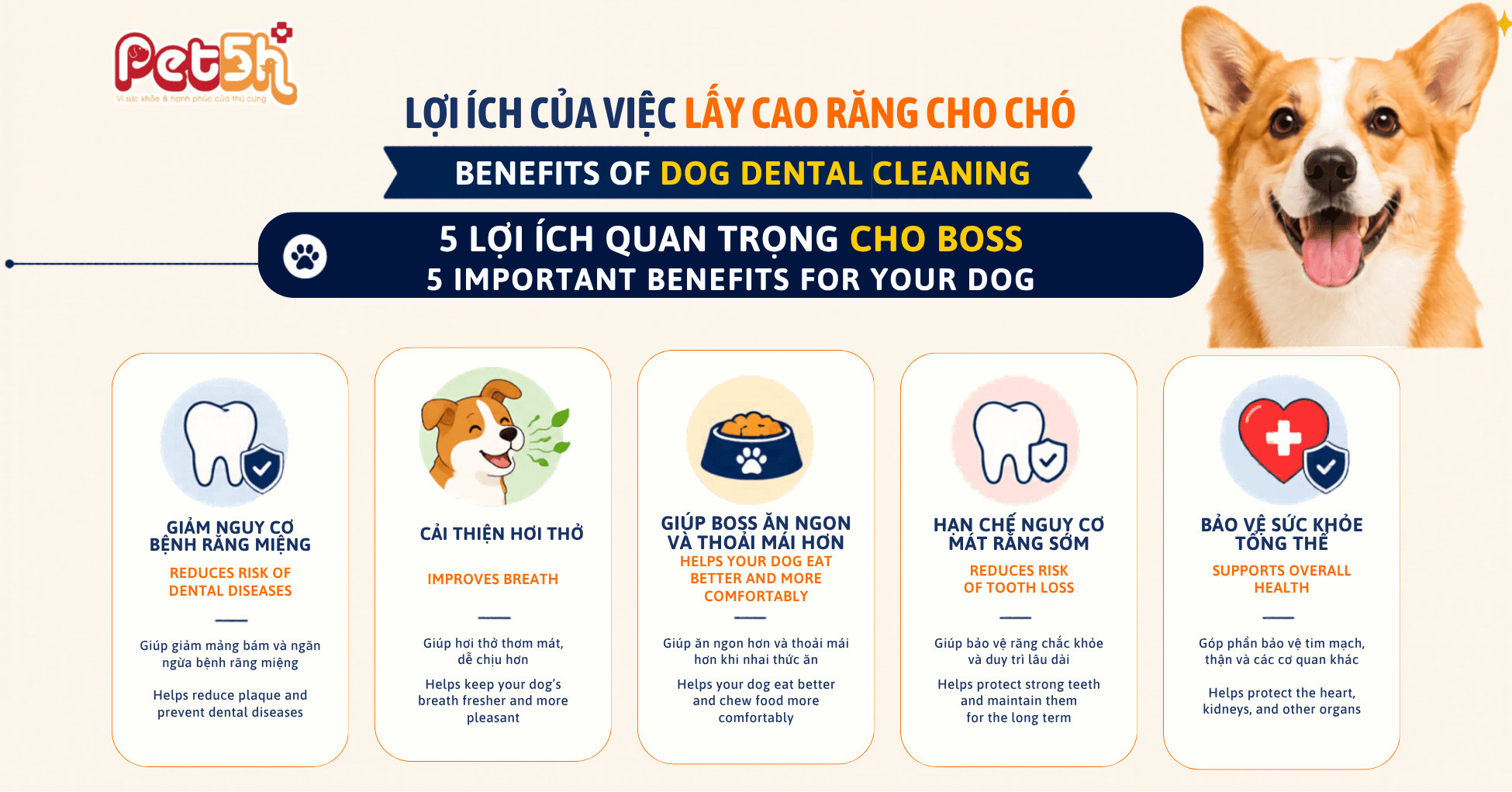
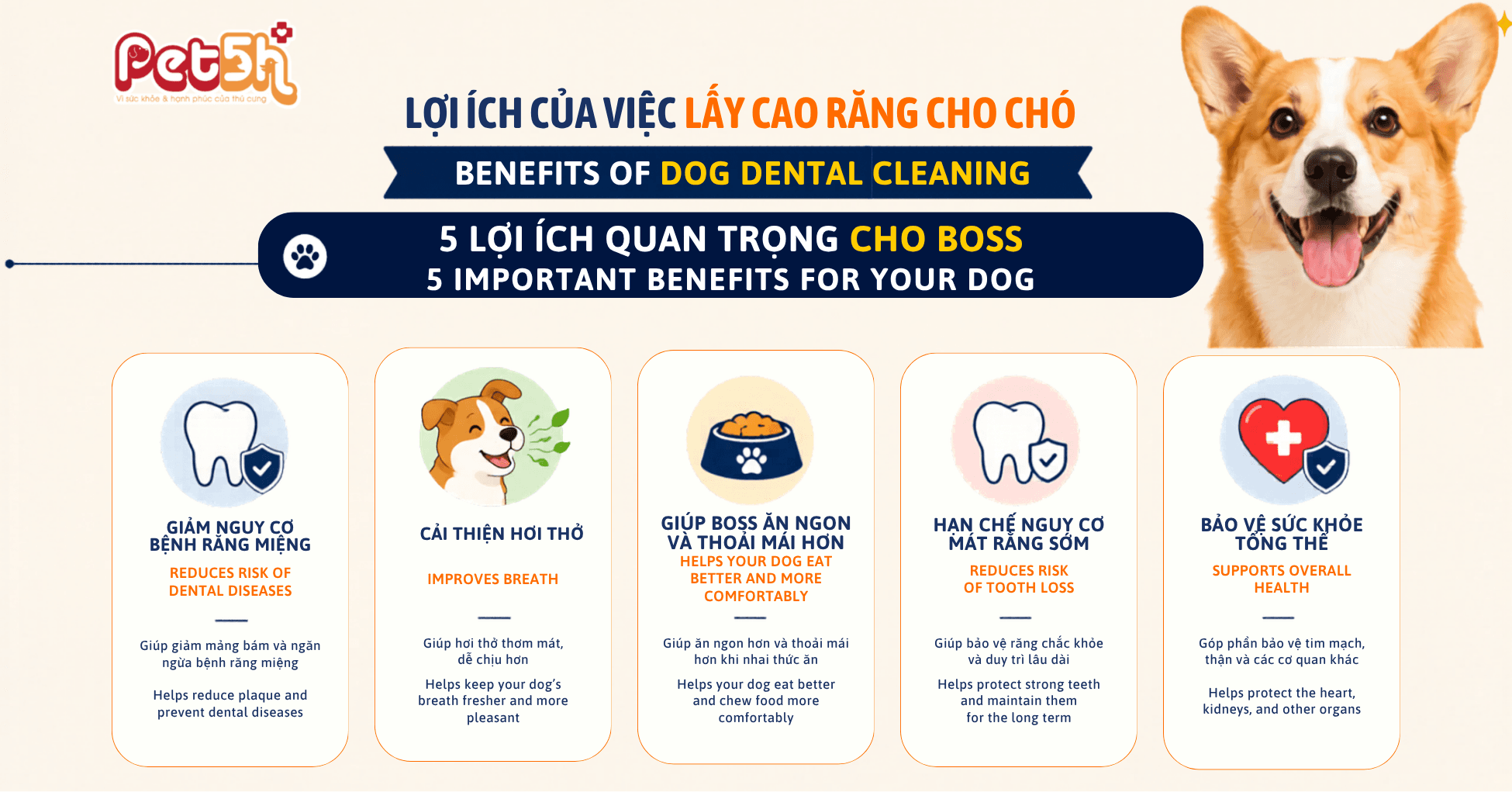
2. Important benefits of dental scaling for dogs
2.1 Reduces the risk of gingivitis and oral diseases
One of the most important benefits of dental scaling for dogs is that it helps reduce the risk of gingivitis, tooth decay, and periodontal diseases. Tartar is a place where many harmful bacteria accumulate. When it remains around the tooth base for a long time, bacteria can attack the gums, causing redness, swelling, bleeding, pain, and inflammation.
If not treated, gingivitis can progress to a more serious stage, causing gum recession, weakened tooth roots, and loose teeth. This not only makes the dog feel pain when eating but also directly affects long-term oral health.
Proper dental scaling helps remove stubborn plaque and tartar, clean the tooth surface, and limit bacterial growth. As a result, the dog’s teeth and gums are better protected, reducing the risk of common oral diseases.
2.2 Improves breath and reduces bad mouth odor
Bad breath is a very common sign in dogs with heavy tartar buildup. The cause usually comes from bacteria breaking down food debris, plaque, and tartar inside the mouth.
Many pet owners try changing food, using breath-freshening treats, or applying oral sprays for dogs, but the bad breath still does not improve clearly. The reason is that the root cause may lie in the tartar layer and bacteria that have remained on the teeth for a long time.
When tartar is cleaned, the amount of odor-causing bacteria is significantly reduced, helping the dog’s breath become more pleasant. This also makes cuddling, petting, and playing with the pet more comfortable every day.
2.3 Helps the dog eat more easily and comfortably
Oral pain can cause dogs to eat slowly, chew on only one side, stop eating, prefer soft food, or show discomfort when chewing hard food. These are signs that pet owners should not ignore.
When tartar causes gingivitis or makes the tooth roots sensitive, the dog may feel pain every time it eats. If this condition continues, it can affect nutrient absorption, body condition, and the dog’s mental well-being.
Dental scaling helps reduce discomfort in the mouth and supports more comfortable eating. When the gums are no longer painful and thick plaque no longer interferes, dogs can chew better, eat with more appetite, and maintain a more stable daily routine.
2.4 Helps reduce the risk of early tooth loss
Tartar does not only make teeth yellow; it can also affect the supporting structure of the teeth. When bacteria grow for a long time around the tooth roots, the gums may become inflamed, recede, and gradually weaken the teeth.
In severe cases, teeth may become loose, painful, or require further treatment to prevent long-term infection. This is commonly seen in older dogs, small-breed dogs, or dogs that do not receive regular oral care.
Regular dental scaling helps better protect the gums and tooth roots, thereby supporting strong and healthy teeth. This is an important part of care that helps dogs reduce the risk of early tooth loss and maintain better eating ability as they age.
2.5 Contributes to overall health protection
Oral disease does not only stay inside the mouth. When gum inflammation persists for a long time, bacteria may enter the bloodstream and affect important organs such as the heart, liver, and kidneys.
This is especially important for senior dogs, dogs with weak immunity, or dogs with underlying diseases. A problem that seems to be only bad breath or tartar may become a factor affecting the dog’s overall health if not cared for properly.
Therefore, dental scaling when necessary not only helps the dog have cleaner teeth but also contributes to whole-body health protection. This is an important part of long-term pet care, especially for families who consider their dogs as members of the household.
3. Signs that your dog needs an oral check and dental scaling
Pet owners should check their dog’s mouth regularly. If one or more of the following signs are noticed, the dog should be taken to a veterinary clinic for examination:
- Yellow, brown, or dark brown plaque appears on the teeth, especially near the tooth roots.
- The mouth has an unpleasant odor, even after changing food or using products that help reduce odor.
- The gums are red, swollen, bleed easily, or show signs of inflammation.
- The dog eats slowly, has difficulty chewing, stops eating, or chews on only one side of the mouth.
- Teeth are loose, gums are receding, or there is abnormal discharge around the tooth roots.
When these signs appear, pet owners should not use sharp objects to scrape tartar at home. Incorrect handling can scratch the gums, cause bleeding, pain, or infection for the dog.
4. When should dogs have dental scaling?
Depending on oral condition, age, breed, and daily care habits, the appropriate time for dental scaling may vary. In general, dogs should have their oral health checked about every 6 months to detect plaque, gingivitis, or other abnormalities early.
For dogs with thick tartar, severe bad breath, red and swollen gums, loose teeth, or dogs that have not had a dental check for a long time, pet owners should not wait until the routine check-up schedule but should take the dog to the clinic early. Timely intervention helps limit complications and makes the treatment process simpler and safer.
In particular, senior dogs, dogs with underlying diseases, or dogs in weak physical condition need to be carefully evaluated by a veterinarian before the procedure, especially if anesthesia is required for deep dental scaling.
5. Two methods of dental scaling for dogs
Currently, two commonly mentioned methods of dental scaling for dogs are non-anesthetic dental scaling, also known as cosmetic dental scaling, and anesthetic dental scaling using an ultrasonic scaler. Each method has its own advantages and limitations. Pet owners should understand them clearly in order to choose the method suitable for their dog’s oral condition and overall health.
5.1 Non-anesthetic dental scaling for dogs
Non-anesthetic dental scaling is a method of cleaning plaque while the dog remains awake. The person performing the procedure usually uses dental instruments to remove visible tartar on the tooth surface.
Advantages
- This method does not require the use of anesthetic drugs, so it may be considered in some cases where the dog is not suitable for anesthesia.
- The procedure time is usually shorter, and the cost may be lower than dental scaling under anesthesia.
- This method may help temporarily clean external tartar, making the teeth look cleaner and reducing part of the bad breath.
Disadvantages
- The International Veterinary Dental Society (IVDS) and veterinarians do not recommend non-anesthetic dental scaling.
- Because the dog is still awake, it may easily struggle, become stressed, or refuse to cooperate. This can make cleaning less accurate and increase the risk of gum injury.
- This method usually only cleans visible tartar on the tooth surface and cannot thoroughly clean deeper areas such as the inner side of the teeth, spaces between teeth, or below the gumline.
If tartar is not cleaned thoroughly, bacteria can continue to grow and cause bad breath, gingivitis, or periodontal disease. Therefore, non-anesthetic dental scaling should only be considered a supportive option in some mild cases and cannot completely replace examination and deep cleaning at a veterinary clinic.
5.2 Dental scaling for dogs under anesthesia using an ultrasonic scaler
This is a method commonly performed at veterinary clinics. The dog will have a health check before the procedure and will receive suitable anesthesia or pre-anesthesia sedation to remain still during cleaning. The veterinarian uses an ultrasonic scaler to remove tartar firmly attached to the teeth, between the teeth, and near the gums.
This method requires anesthesia, so the dog needs to have its health evaluated before the procedure, especially senior dogs, dogs with underlying diseases, or dogs in weak physical condition.
Advantages
- This method provides more thorough cleaning, especially in hard-to-reach areas such as molars, the inner tooth surfaces, and areas near the gumline.
- Anesthesia helps prevent struggling, reduces stress, and allows the veterinarian to work more accurately. As a result, the risk of gum injury or missed plaque is also lower.
- The ultrasonic scaler can break down hard tartar deposits, supporting more effective cleaning than regular manual scraping.
- During the procedure, the veterinarian can also perform a general oral examination and detect problems early, such as gingivitis, loose teeth, tooth decay, or teeth that require further treatment.
Disadvantages
- The cost is usually higher than non-anesthetic dental scaling.
- After dental scaling, some dogs may feel slightly tired, have mild tooth sensitivity, or need to eat soft food for a short period according to the veterinarian’s instructions.
- Although there are some points to consider, ultrasonic dental scaling under anesthesia remains a deep-cleaning method suitable for cases with heavy tartar, severe bad breath, gingivitis, or the need for a comprehensive oral examination.
6. Which dental scaling method should be chosen for your dog?
The choice of dental scaling method should be based on the dog’s oral condition and overall health. If the dog only has a small amount of external plaque, does not have severe gingivitis, and cooperates well, the non-anesthetic method may be considered as a supportive solution.
However, if the dog has thick tartar, noticeable bad breath, red and swollen gums, loose teeth, or has not had a dental check for a long time, pet owners should take the dog to a veterinary clinic for direct evaluation by a veterinarian. In most cases that require deep cleaning, ultrasonic dental scaling at a veterinary clinic is safer and more effective.
The important point is not to decide only based on cost or word-of-mouth experience. Each dog has a different oral condition, age, and health status, so examination before the procedure is necessary to choose the appropriate method.
The cost of dental scaling for dogs may vary depending on oral condition, the method used, and the veterinarian’s assessment. Therefore, pet owners should take their dogs to a veterinary clinic for examination and suitable advice.
Advice from Pet5H: Do not worry too much about anesthesia. Ultrasonic dental scaling under anesthesia at a clinic is always the optimal and safest choice for your beloved dog’s oral health.
7. How to care for your dog’s teeth after dental scaling
After dental scaling, home care is very important to limit plaque from returning. Pet owners should train their dogs to accept toothbrushing with a toothbrush and toothpaste specifically made for pets. Human toothpaste should not be used because it may contain ingredients unsuitable for dogs.
In addition, chew toys, dry food, or dental treats that support tooth cleaning can be combined. These products encourage the dog to chew more, helping reduce plaque on the tooth surface.
Pet owners should also limit giving dogs too many sweets, sticky soft foods, or human leftovers. These are factors that can make plaque accumulate more quickly.
Besides home care, regular oral checks at a veterinary clinic should be maintained. Early detection of gingivitis, recurrent tartar, or loose teeth will help the dog receive timely treatment and avoid more serious problems.
Share
Facebook