
Pet Health
-20250723151045.png&w=3840&q=75)
At Pet5H, we understand that a diagnosis of chronic kidney disease can be overwhelming for both pet owners and their furry companions. With our advanced diagnostic tools and experienced team, we can provide personalized treatment plans tailored to your pet's specific needs. We understand managing kidney diseases is a constant fight where both pets and their parents will struggle to get an optimal life quality for pets. For that reason, we are committed to your pet's overall health and well-being by medication and nutritional management.
WHY CHRONIC KIDNEY DISEASE SO IMPORTANT?
- What is chronic kidney disease?
Chronic Kidney Disease (CKD) is a condition where the kidneys gradually lose their ability to filter waste products from blood , leading to pets getting intoxicated. This renal damage is usually irreversible. Untreated CKD can lead to various complications like anemia, high blood pressure, dehydration, and more. Additionally, it is a big risk factor of other fatal health problems like heart disease and gastrointestinal issues.
To prevent or slow down CKD, it's important to identify the extent of damage and manage the risk factors. This can help reduce the severity of the disease and improve the pet's overall quality of life
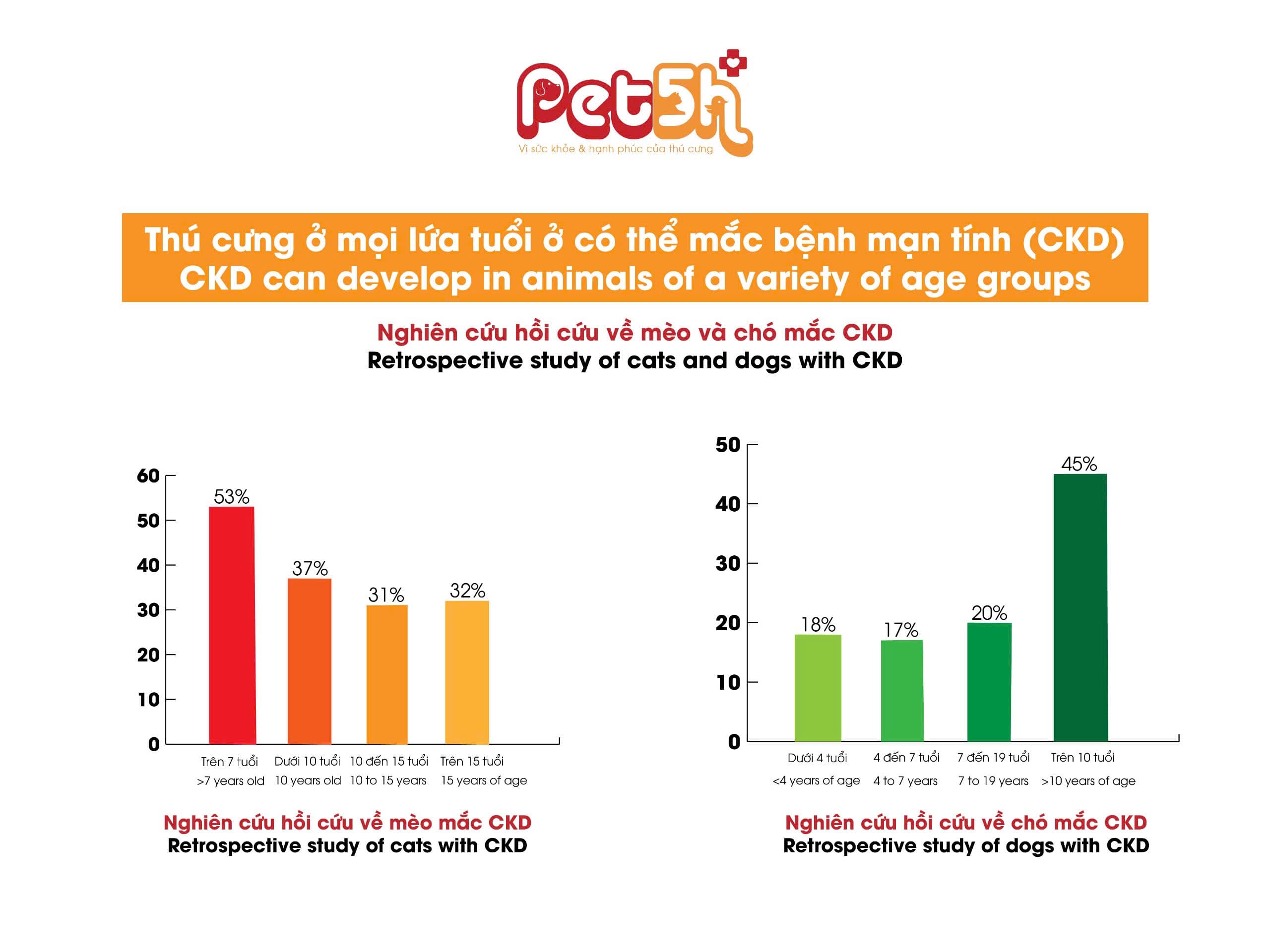
- How common is chronic kidney disease in dogs and cats?
CKD can develop in animals of a variety of age groups.
WHAT ARE THE SIGNS?
Many of the signs are vague and non-specific – some arise from the accumulation of toxins in the blood while others may arise as complications from the body trying to adapt to the disease. The most common signs are:
- Weight loss
- Poor appetite (inappetence)
- Lethargy
- Increased urination (polyuria)
- Polydipsia - The increased production of urine occurs because animals begin to lose the ability to concentrate their urine with CKD, and they begin to drink more to compensate for this.
Other signs may include:
- Poor coat
- Hypertension (high blood pressure)
- Vomiting
- Bad-smelling breath (halitosis)
- Weakness
- Anaemia
VETERINARY DIAGNOSIS FOR CHRONIC KIDNEY DISEASE
- Fluorescence immunoassay test - a golden methods for chronic kidneys disease diagnosis (cCys, fCys and SDMA)
- Cystatin C: This diagnosis technique is utilized for renal function assessment. Fluorescence immunoassay test is a sensitive-fast response technique measuring the level of cystatin C in the bloodstream. When kidney function is normal and the kidneys are still functioning well, Cystatin C is filtered and metabolized by the kidneys, so the concentration of Cystatin C remains unchanged. However, when kidney function is impaired due to kidney failure or some other disease affecting kidney function, glomerular filtration rate declines, leading to increased concentrations of substances to be eliminated in the blood including Cystatin C.
- SDMA: When it comes to kidney function decline, SDMA can keep you ahead of the curve. As glomerular filtration rate (GFR) declines, SDMA increases on average with 40% and as little as 25% loss of kidney function versus creatinine, which does not increase until up to 75% of kidney function is lost. SDMA can detect mild to moderate function loss that creatinine misses. This earlier detection can have a positive impact in diagnosis, treatment, and patient outcomes.
- Other functional tests
- Urinalysis, urine protein-to-creatinine ratio, and/or urine culture
- Imaging studies (contrast study)
VETERINARY TREATMENT FOR CHRONIC KIDNEY DISEASE
Treatment will depend on your pet’s overall health, severity of kidney diseases and underlying causes, if any.
Chronic kidney disease treatment may include specialized diets, dialysis nutritional supplements, medications and at home fluid therapy.
THE WHOLE VETERINARY PROCESS

HOW TO PREVENT KIDNEY DISEASE
Chronic kidney disease is not preventable, but you can keep your pet healthy for as long as possible by:
- Feeding a healthy diet
- Staying up-to date on vaccinations
Taking your pet for veterinary visit every month for health evaluation and act accordingly to reduce the risk of kidney disease.
Share
Facebook