Cat

Raising a cat at home is not just about providing good food and a warm bed, but also about creating a living environment that truly suits the cat’s natural instincts and needs. At Pet5H, we’ve found that many health, behavioral, and psychological issues in cats originate from their everyday living environment. When the space is not safe enough, lacks stimulation, or does not meet the cat’s natural needs, they can easily become stressed, bored, or develop behavioral problems such as scratching furniture, hiding, poor appetite, or persistent vocalization. In contrast, a well-designed living environment that matches the cat’s personality not only keeps them healthy but also makes them more confident, bonded, and harmonious with their owners.
This article summarizes the most practical and easy-to-apply guidelines from Pet5H’s experience in cat care. We hope it helps you better understand what your cat truly needs to live comfortably, safely, and happily right inside your home.
1. Should Cats Go Outdoors? The Truth Most Owners Don’t Know
Many owners believe cats should go outdoors to be “free,” “entertained,” or to “express their natural instincts.” However, from a health and safety perspective, letting cats roam freely carries far more risks than you might expect. Many cases of trauma, infection, poisoning, or severe stress that Pet5H receives are directly related to cats being allowed outside.
The outdoors is not always a safe environment. Traffic accidents are the most serious danger. Cats have fast reflexes but cannot judge vehicle speed. They can be attracted to movement and dash into the road without realizing the risk. Even a minor collision can cause head trauma, broken bones, or internal injuries.
Beyond traffic, cats may encounter attacks from dogs or stray cats. Many wounds appear small at first but develop into large abscesses or even sepsis after a few days. Contact with stray cats also increases the risk of contracting serious infectious diseases such as FIV or FeLV.The outdoor environment also contains many toxic chemicals that are not easily noticed. Rodenticides, pesticides, and cleaning chemicals can stick to a cat’s fur. Just one grooming session can cause poisoning, leading to vomiting, seizures, or liver failure. Many owners don’t understand why a healthy cat suddenly vomits severely until the vet identifies signs of toxicity.Allowing cats to roam also increases the risk of parasites such as roundworms, hookworms, fleas, and ringworm. These organisms cause itching, skin inflammation, and diarrhea, and can also be transmitted to humans-especially children.Another factor often overlooked is the ecological impact of free-roaming cats. Their hunting instinct drives them to attack birds, squirrels, and small animals. Even when well fed, cats still hunt because the stalking instinct is very strong. This can significantly disturb the local ecosystem.For these reasons, Pet5H always recommends keeping cats entirely indoors for their safety. If you want your cat to “go outside” safely, you can use a harness, a cat backpack, or create a secure mesh-protected area for exploration.
2. Cats’ Need for Exercise A Key Factor for Their Physical and Mental Health
There is a common misconception that cats are “lazy” because they sleep a lot. In reality, sleeping frequently is simply their way of conserving energy when there is nothing to hunt. In a natural environment, cats are constantly active through stalking, jumping, chasing, and pouncing. These instinctive movements help maintain muscle strength, agility, and overall health.
When living indoors, cats no longer have the opportunity to follow their natural activity cycle, leading to excess energy and boredom. As a result, they are more likely to develop obesity, fatty liver disease, diabetes, joint degeneration, or abnormal behaviors.
Many cats brought to Pet5H show the same pattern: eating a lot, sleeping a lot, moving very little, and becoming less agile. Some become irritable, destructive, or start urinating outside the litter box because their excess energy is not released properly.The important thing is that you do not need a large house or expensive toys to help your cat exercise. Simple activities such as playing with a feather wand, tossing small balls, using a laser pointer, or even crumpled paper can help cats burn energy effectively. Consistency matters most. Just 10–20 minutes a day can make a big difference.
Additionally, despite their small size, cats love vertical three-dimensional spaces. A cat tree, a few wall shelves, or a window perch can be an ideal “playground.” Climbing, jumping, and observing from high places make cats feel safer, reduce stress, and improve their mental well-being.
Another effective method is turning mealtime into a physical activity. Instead of placing the food bowl in one spot, you can divide meals into small portions and hide them in different locations for your cat to find. This mimics natural hunting behavior and stimulates both the body and mind.
3. Creating a Safe Home for Cats Simple in Theory, Easily Overlooked in Reality
A safe home is not defined by cleanliness or appearance, but by removing hidden dangers that may harm your cat. Many accidents happen inside homes that seem “perfectly safe.”
The first and most common risk is a cat swallowing small objects. Items like hair ties, fishing line, thread, buttons, small pieces of plastic, or metal can disappear in an instant but become lodged in the intestines. This leads to intestinal blockage, infection, or the need for surgery. Many cats brought to Pet5H arrive with continuous vomiting and loss of appetite, only for X-rays to reveal a long piece of string stuck inside.
Household chemicals such as floor cleaners, dish soap, insect sprays, air fresheners, and especially essential oils are major hazards. Cats have a very sensitive liver and cannot metabolize many essential oils such as tea tree, peppermint, or lavender. Simply inhaling too much or having skin contact can cause toxicity.
Indoor plants also need to be considered. Many popular plants-such as lilies, pothos, poinsettias, and dracaena-are extremely toxic to cats. Some cause mild vomiting, while others can trigger acute kidney failure. Even a small amount of pollen or a fallen leaf in the water bowl can be dangerous.
Balconies and high windows are hidden dangers. Even though cats have good balance, accidents can happen when they get excited, chase insects, or slip. Many “fallen-from-height” cats are brought to Pet5H with multiple traumatic injuries.
Another common mistake is giving human medication to cats. Many owners don’t realize that even one tablet of paracetamol can cause liver failure in cats. Nasal sprays, pain relievers, and cold medicine often contain ingredients that are highly toxic to cats.
Cats are also sensitive to noise and routine changes. A noisy home can cause stress and make them hide. Therefore, cats need a quiet personal space where they can rest.
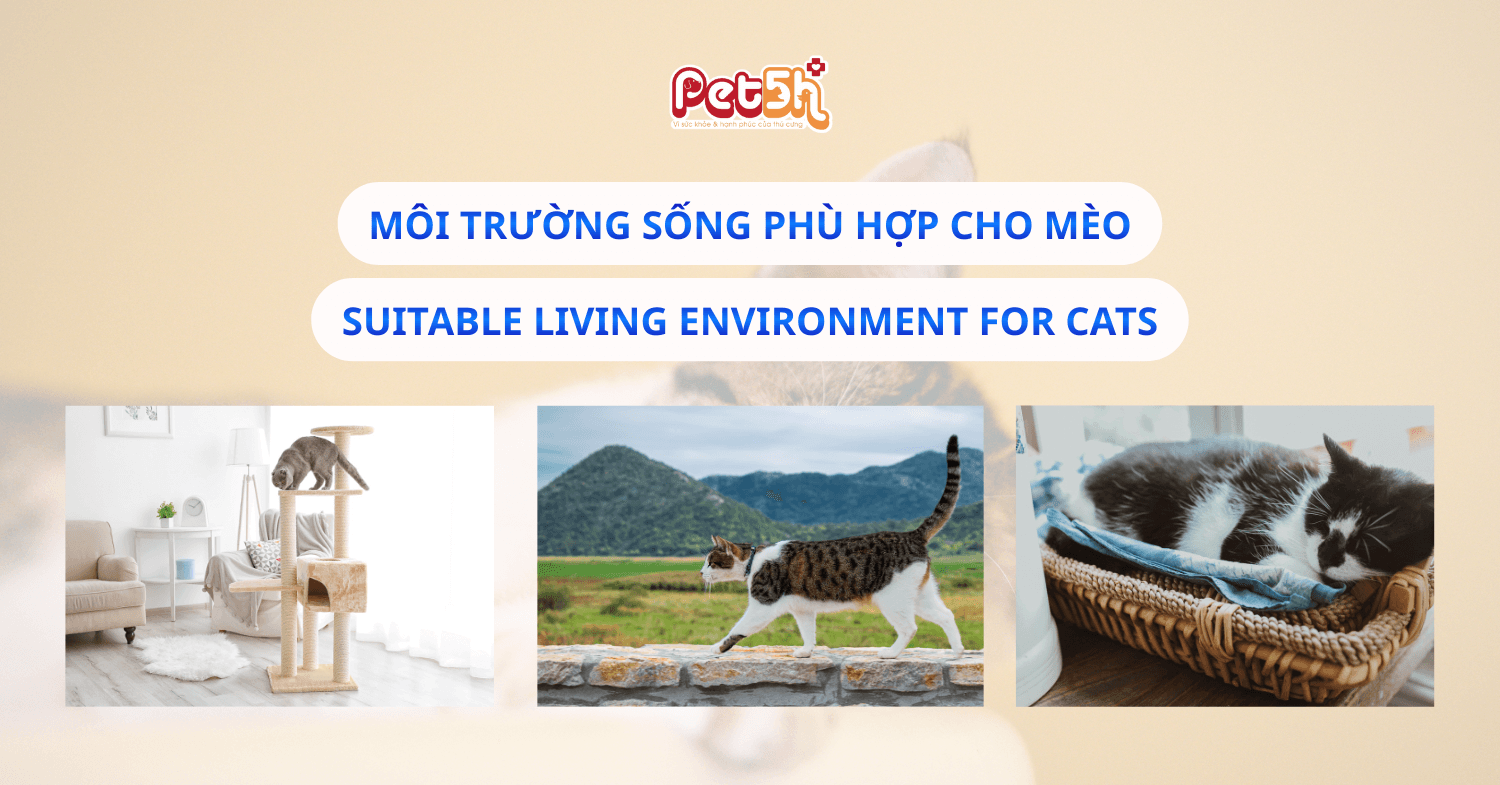
Suitable living environment for cats
4. A Cat’s Quality of Life An Aspect Many Owners Overlook
Beyond safety and physical activity, cats also require emotional and mental care. They dislike chaos and are highly sensitive to changes. A good living environment respects the cat’s natural rhythm and maintains stability.
Maintaining consistent schedules for feeding, sleeping, litter box use, and play helps cats feel secure. Sudden changes-such as moving the litter box, adding a new pet, or altering the home’s scent-can cause stress.
Natural sunlight is also important for a cat’s health. Many cats enjoy sunbathing by the window because sunlight helps regulate their biological rhythm and provides relaxation. Observing the outside environment also helps relieve mental energy.
Cats also have a highly sensitive sense of smell. Strong scents such as air fresheners, cigarette smoke, or essential oils can cause discomfort. A space with mild, familiar scents helps cats feel safer.
5. A Suitable Environment Supports Both Physical and Mental Health
A suitable living environment not only helps cats prevent diseases but also nurtures their emotional and behavioral well-being every day. When living in a safe space with adequate stimulation that respects their natural needs, cats become happier, healthier, and more bonded with their families.
Pet5H hopes that these insights help you better understand what your cat truly needs for a fulfilling life. Every cat is unique, and you are the only one who can provide the best living environment for them.
Share
Facebook